All-Risk vs Carrier Liability: Which Is Better for You?
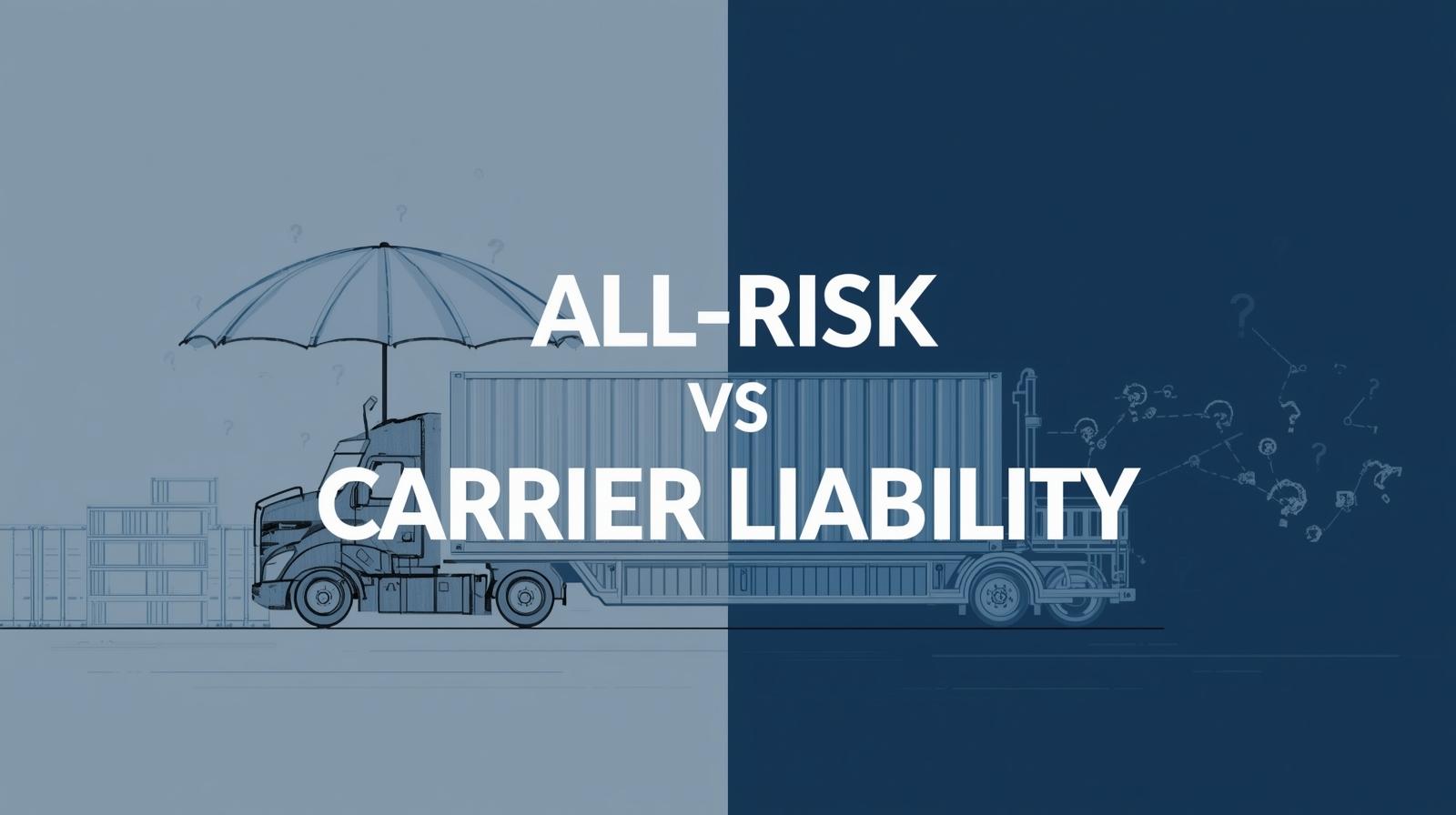
When shipping goods — whether domestically or internationally — protecting your cargo should always be a top priority. But with different coverage options available, such as carrier liability and all-risk cargo insurance, it can be confusing to know which one is right for your business.
While carrier liability may seem sufficient at first glance, it often provides limited protection. On the other hand, all-risk insurance offers much broader coverage but usually comes at a slightly higher cost.
In this article, we’ll break down the key differences between all-risk coverage and carrier liability, and help you decide which option best fits your shipping needs and budget.
Understanding the Basics
Before comparing the two, let’s clarify what each one means.
What Is Carrier Liability?
Carrier liability refers to the legal responsibility of a carrier (trucking company, airline, or shipping line) for goods in their possession. In simple terms, if your cargo is lost or damaged due to the carrier’s fault, they are required to compensate you — but only up to a certain limit.
Carrier liability is not full insurance; it’s a limited responsibility defined by international conventions or transport laws. It usually depends on:
- The type of transport (road, sea, air, or rail)
- The weight or number of packages shipped
- Proof that the carrier was negligent
For example, if your shipment was damaged due to a natural disaster or poor packaging, the carrier might not be held responsible at all.
What Is All-Risk Cargo Insurance?
All-risk insurance, also known as comprehensive cargo coverage, protects your goods against most types of physical loss or damage during transit — regardless of who’s at fault.
Unlike carrier liability, all-risk insurance compensates you based on the actual value of your goods, not their weight or package count. It covers a wide range of risks, including:
- Accidents and collisions
- Theft and pilferage
- Fire and explosion
- Weather events (storms, floods, etc.)
- Mishandling or loading errors
- Container loss or leakage
Simply put, all-risk coverage gives you full protection for your shipment from the moment it leaves your warehouse until it reaches its destination.
Key Differences: All-Risk vs Carrier Liability
Let’s take a closer look at the main differences between the two types of coverage:
| Factor | Carrier Liability | All-Risk Cargo Insurance |
|---|---|---|
| Type of Protection | Limited legal responsibility of the carrier | Full insurance coverage for most risks |
| Coverage Value | Based on cargo weight or unit (e.g., £2–£8 per kg) | Based on actual or declared cargo value |
| Fault Requirement | You must prove carrier negligence | Covers most losses regardless of fault |
| Exclusions | Many (e.g., natural disasters, poor packaging) | Few (only specific exclusions listed) |
| Claim Process | Complex and slower | Easier, faster, and handled by insurer |
| Premium Cost | Included or very low | Small extra premium (usually 0.1%–0.6% of cargo value) |
| Best For | Low-value or non-critical goods | High-value, time-sensitive, or fragile shipments |
The Hidden Limits of Carrier Liability
Many shippers and importers mistakenly assume that carrier liability will fully protect them in case of loss or damage — but this is rarely the case.
Here’s why:
- Payouts Are Capped by Weight
Carrier liability typically compensates based on weight, not value.- Example: Under the CMR Convention for road transport, the limit is €8.33 per kilogram.
So, if your 1,000 kg shipment worth £100,000 is damaged, you might only receive about £7,000, leaving a massive gap uncovered.
- Example: Under the CMR Convention for road transport, the limit is €8.33 per kilogram.
- You Must Prove Negligence
To make a successful claim, you must show that the carrier was directly responsible for the loss — which can be difficult and time-consuming. - Many Risks Are Excluded
Natural disasters, theft, or “acts of God” are often not covered under carrier liability. So, if your goods are stolen or lost due to a storm, you might not receive any compensation. - Claim Processing Is Slow
Because liability must be established, the claim process often involves legal disputes and long waiting periods.
In short, carrier liability offers minimal protection and may leave your business exposed to significant financial losses.
The Advantages of All-Risk Cargo Insurance
All-risk insurance provides complete peace of mind for shippers, importers, and exporters alike. Here are its top benefits:
1. Full Value Protection
You’re compensated for the total value of your goods, including freight and additional costs if needed. There’s no need to rely on weight-based calculations.
2. Coverage for Most Events
It protects your cargo against almost any physical loss or damage, except for explicitly excluded events (like intentional acts, war, or inherent product defects).
3. No Need to Prove Fault
You don’t have to prove the carrier was negligent — your insurance covers the loss automatically if it falls under policy terms.
4. Faster Claims and Payouts
Insurance companies typically process claims faster than carriers because their goal is to resolve issues quickly and maintain client trust.
5. Confidence for Global Trade
All-risk coverage ensures that you can ship goods anywhere — by sea, air, or land — with full financial security.
When to Choose Carrier Liability
Carrier liability can be a suitable option in certain cases, such as:
- Low-value shipments: If your goods have minimal value, full insurance might not be cost-effective.
- Short-distance or local transport: For short trips with reliable carriers, the risk of major loss is lower.
- Contracts already include coverage: Some logistics contracts include enhanced liability terms.
However, even in these cases, it’s important to understand the exact limits and exclusions.
When to Choose All-Risk Insurance
You should always choose all-risk cargo insurance when:
- You’re shipping high-value or fragile goods.
- Your cargo moves long distances or across multiple transport modes.
- You want door-to-door protection from origin to destination.
- You need fast claims processing and minimal risk exposure.
For importers, exporters, and logistics companies, all-risk coverage is the best long-term investment in reliability and financial safety.
Real-World Example
Let’s say you’re a UK importer shipping £50,000 worth of furniture from Italy.
During transport, the truck gets into an accident and the cargo is heavily damaged.
- With Carrier Liability: You may only receive £3,000–£4,000 (based on weight).
- With All-Risk Insurance: You receive the full £50,000 (minus a small deductible).
The small cost of an all-risk premium easily outweighs the potential loss without it.
How to Get the Best Coverage
If you decide to go with all-risk insurance, here are a few tips:
- Work with a reputable insurer or broker experienced in logistics.
- Declare the correct cargo value and ensure it includes shipping and duty costs.
- Read exclusions carefully — every policy is slightly different.
- Ask for door-to-door coverage if your shipment changes carriers or transport modes.
- Keep documentation (bills of lading, invoices, packing lists) ready in case of claims.
Final Verdict: Which Is Better for You?
If you’re serious about protecting your cargo and your bottom line, all-risk cargo insurance is the clear winner.
While carrier liability may meet legal requirements, it doesn’t offer real financial protection. The small premium you pay for all-risk coverage can save you tens of thousands of pounds if something goes wrong.
So, the next time you ship goods — whether within the UK or abroad — ask yourself this simple question:
Can I afford to lose my cargo and not be fully reimbursed?
If the answer is “no,” then all-risk insurance is definitely better for you.


Post Comment